Thinking about buying, selling, or renting out a place in Topsail Beach? Coastal living comes with questions about flood zones, insurance, and short-term rental rules. You want clear answers so you can budget smartly, protect your property, and stay compliant. In this guide, you’ll learn how to read flood maps, price out coverage, and plan for the town’s rental requirements. Let’s dive in.
Flood zones in Topsail Beach: what they mean
Topsail Beach sits on a barrier island, so many properties fall inside FEMA’s Special Flood Hazard Areas. Zones that start with A or V signal higher flood risk, with VE zones indicating coastal wave action and stronger building standards. Local maps also show the Limit of Moderate Wave Action, which helps you understand where breaking waves can reach. Pender County notes that some flood panels were updated in recent years, so confirm the panel date when you review any address.
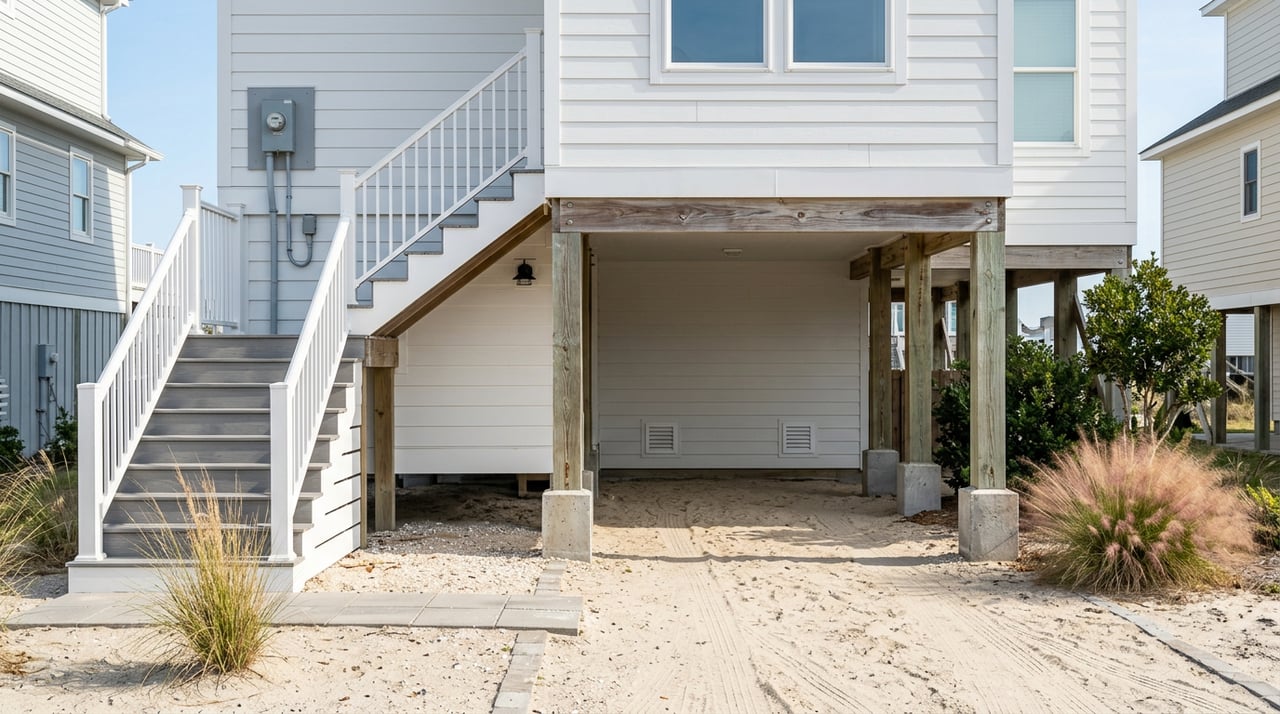
When you evaluate a property, pay attention to the Base Flood Elevation. Your building’s first-floor height relative to that BFE influences both insurance pricing and what you can build. In VE zones, expect elevated foundations and breakaway wall criteria for enclosed space below the living level. For local mapping context and recent panel history, review Pender County’s flood readiness guidance.
- Review FEMA flood map basics and how determinations work using the FEMA Map Service Center how-to page: FEMA Map Service Center
- See Pender County’s flood readiness overview for local mapping notes: Pender County Flood Readiness & Resiliency
How to confirm a property’s flood designation
Verifying the exact flood zone, panel, and BFE for a specific address is essential before you write an offer or list a home.
Step-by-step mapping check
- Start with the FEMA Flood Map Service Center to find the official FIRM panel and zone that lenders and insurers use. Save the panel number and zone for your records.
- Use North Carolina’s FRIS layers, which Pender County directs owners to, for state data and BFEs. Access the state portal from the county’s resource page: Know Your Flood Hazard.
- Contact the Town of Topsail Beach Community Development office to ask about any elevation certificates on file, local permitting conditions, and floodplain questions: Topsail Beach Community Development.
What zones mean for permits and building
If a home sits in an A, AE, or VE zone and you plan a new build or substantial improvement, you will face elevation and flood-resistant construction requirements. VE zones carry the most stringent coastal standards because of wave action. Always confirm the regulatory flood protection elevation, which is the BFE plus any local freeboard. The Town’s floodplain manager can help you understand how these rules apply to a particular address.
Flood insurance in Topsail Beach: what to know
Flood insurance is both a financing requirement in many cases and a smart risk tool in a coastal setting.
NFIP vs private market and lender rules
If a property is inside an SFHA and you use a federally related loan, your lender must require flood insurance. You can typically choose between a National Flood Insurance Program policy or a private flood policy, depending on availability and lender acceptance. FEMA’s Risk Rating 2.0 now prices NFIP policies using property-specific factors, like elevation, distance to water, and foundation type, rather than relying only on zones and BFEs. Learn more about the rating approach here: FEMA Risk Rating 2.0.
Typical NFIP limits and waiting period
For single-family homes, standard NFIP policy limits go up to 250,000 dollars for the building and up to 100,000 dollars for contents. Many higher-value coastal homes consider private excess coverage to bridge the gap above NFIP limits. There is typically a 30-day waiting period for new NFIP policies, with certain exceptions for loan-related purchases. See a concise federal overview of limits and timing: NFIP coverage limits and waiting period.
Cost drivers to budget in Topsail Beach
On the island, premiums respond to a few big factors. VE or coastal high-hazard designations, a low first-floor elevation relative to BFE, older or less flood-resistant foundation types, and replacement value all matter. Prior flood claims and local wind or named-storm deductibles can also affect your total insurance cost stack. For local context and mitigation planning, review Pender County’s flood readiness resources: County flood readiness guidance.
Short-term rentals in Topsail Beach
If you plan to rent short term, line up taxes, operations, and zoning early so your calendar stays on track.
Occupancy tax and definitions
Short or seasonal rental definitions in North Carolina often key off stays under 90 days, but you should verify local code language on Municode. Inside Topsail Beach town limits, the occupancy tax for short-term stays is 6 percent, and it is payable to the Town. The tax is remitted monthly in most cases, with quarterly options for low volume. Set up your compliance workflow with the guidance here: Pender County Occupancy Tax.
Operational rules to plan for
The Town outlines specific operational requirements for STRs. One example is the requirement for two trash carts at short-term rental properties. You can find service details on the utilities page: Water and Garbage Service. For definitions, signs, nuisance, and other local provisions, research the active code in the town’s Municode library: Topsail Beach Ordinances.
Zoning, permits, and HOA checks
Whether STR use is allowed depends on zoning, any local licensing or registration rules, and HOA covenants. The Town’s Community Development team can confirm permitted uses for a specific parcel and provide any necessary forms or steps: Community Development contacts. Always review HOA documents for rental limits, minimum stays, or registration requirements.
A practical property checklist
Use this quick workflow to vet any Topsail Beach address before you buy, sell, or switch to STR use.
- Pull the FEMA map data. Confirm the official FIRM panel, flood zone, and any LiMWA or CBRA notes using the FEMA Map Service Center. Save a PDF for your lender and insurer.
- Check state and county layers. Use the NC FRIS portal via the county’s resource page to see BFEs and whether a preliminary panel may change your zone.
- Ask for elevation certificates. Request any elevation certificate or Letter of Map Change from the seller and the Town. If none exist, budget a new survey and EC to tighten insurance quotes.
- Talk to Community Development. Confirm freeboard requirements, VE-zone construction standards, and any pending map adoptions that could affect permitting or premiums.
- Get NFIP and private quotes. Provide the EC and replacement-cost estimate so you can compare apples to apples under Risk Rating 2.0. Ask about wind coverage and deductibles.
- Model STR compliance costs. Factor the 6 percent occupancy tax, trash service requirements, cleaning, signage, and 24/7 local contact logistics into your pro forma.
- Confirm zoning and HOA terms. Verify that STRs are allowed in your zoning district and that your HOA aligns with your plan.
- Review shoreline context. For oceanfront or inlet-adjacent lots, study the town’s beach management notes and recent nourishment or dredging activity to understand long-term exposure.
- Plan mitigation and upgrades. Budget for elevating mechanicals, compliant enclosures, and any foundation work if you plan substantial improvements.
- Coordinate early with your lender. Ask about the Standard Flood Hazard Determination and evidence-of-insurance timing so you avoid last-minute force-placed coverage.
For STR and mapping references, start with these official sources:
- FEMA mapping how-to and official panels: FEMA Map Service Center
- County flood and mapping guidance: Pender County Flood Readiness & Resiliency
- Town permitting and floodplain contacts: Topsail Beach Community Development
- Occupancy tax rules for Topsail Beach: Pender County Occupancy Tax
- Local code library for rentals and other rules: Topsail Beach Ordinances
Long-term shoreline context to consider
Beach nourishment and inlet dredging shape shoreline resilience and navigation over time. These projects do not remove flood risk, but they can affect risk perception and infrastructure performance. To understand recent activity and funding needs around the inlets, review this news report on ongoing work: Norfolk Dredging on Topsail inlets.
Work with a local, execution-focused partner
You can navigate flood maps, insurance quotes, and rental rules with confidence when you have a project-minded agent in your corner. If you want help pulling the right data, coordinating an elevation certificate, modeling insurance scenarios, or setting up a compliant STR, let’s talk strategy. Schedule a local market and project consultation with Matthew Berglund to build a plan tailored to your address and goals.
FAQs
What is a VE flood zone in Topsail Beach?
- VE is a coastal high-hazard area where breaking waves are expected during a base flood. Homes in VE zones face stricter elevation and foundation standards and typically higher insurance costs.
How do I check if a Topsail Beach property is in an SFHA?
- Use the FEMA Map Service Center to find the official FIRM panel and zone, then confirm BFEs and any preliminary changes through NC FRIS via Pender County’s flood resource page.
How does FEMA’s Risk Rating 2.0 change premiums?
- NFIP pricing now reflects property-specific factors like elevation, distance to water, and foundation type. Some properties see increases and others decreases based on their individual risk profile.
What flood insurance limits should I budget for a single-family home?
- Standard NFIP limits are up to 250,000 dollars for the building and up to 100,000 dollars for contents. Higher-value homes often consider private excess coverage.
What is the NFIP waiting period for new policies?
- The typical waiting period is 30 days, with certain exceptions for loan-related purchases. Start early so closing or listing dates are not delayed.
What is the short-term rental tax rate in Topsail Beach?
- Inside Topsail Beach town limits, short-term stays are subject to a 6 percent occupancy tax that is payable to the Town. Set up registration and remittance before hosting.
Are there operational rules for STRs, like trash service?
- Yes. The Town requires two trash carts for short-term rental properties and enforces other operational standards. Review the utilities page and active code before you list.